

Update (10:30 a.m. July 19, 2026):
The Department of Natural Resources (DNR) says Mooseland Road fire is now being held. The fire saw minimal growth yesterday and is now estimated at 1447 hectares.
Nova Scotia Emergency Management has rescinded the evacuation alert for those between 4315 Mooseland Road and Highway 7.
Ground crews are onsite, along with Heavy Equipment, to continue fire suppression efforts throughout the day. DNR mentions that Aircraft are available, but are not anticipated to be needed.
Firefighters on site include 35 DNR and 43 Halifax Regional Fire & Emergency firefighters and support staff.
Find the latest information about the evacuations here.
Update (5:00 p.m. July 18, 2026):
Halifax Regional Municipality says a evacuation is still in effect for Mooseland Road, from 4315 Mooseland Road to Highway 7.
The evacuation zone remains the same with the road closed from 4315 Mooseland Road to Highway 7.
As of now, 24 households (44 people in total) have registered with the Canadian Red Cross and some are expected to stay at an evacuation centre overnight.
City officials warn that while the amount of smoke from the wildfire appears to have decreased, residents should still monitor current air quality in case conditions change.
Crews are reminding those remaining in the area to be prepared to evacuate on short notice.
Update (3:30 p.m. July 18, 2026):
In a Saturday afternoon update, the DNR says there have been no significant changes since the morning, and that the fire remains out of control at about 1,386 hectares.
Crews continue to use two Department of Natural Resources (DNR) helicopters, four DNR fixed-wing water bombers, two fixed-wing water bombers from Newfoundland, ground crews, and heavy equipment.
Mooseland Road remains closed beginning at the intersection of Highway 7 and Mooseland Road and crews are asking people to avoid the area.
DNR says this will be their last update for today unless there is a significant change to the fire.
Update (11:00 a.m. July 18, 2026):
The DNR says the Mooseland wildfire, located by Sixth Lake in Halifax County, is now estimated to be closer to 1,386 hectares, or 13.86 sq. km, due to more accurate mapping of the area.
Fire crews along with two DNR helicopters and four fixed-wing water bombers are assigned to the fire. That includes 25 DNR and 45 Halifax Regional Fire & Emergency firefighters on site, as well as two fixed-wing water bombers from Newfoundland have also joined the fight.
Mooseland Road is closed to traffic beginning at the intersection of Highway 7 and Mooseland Road.
Lyle Arnold, a resident who lives near the fire zone, says right now the wind is blowing in the opposite direction of his property, but that if conditions change, his area is the next to be evacuated.
“It’s a little tense, especially [because] my home and my job would be affected. Fingers crossed and lots of prayers it doesn’t come this way,” he says in a message to Acadia News.
Update (8:00 p.m. July 17, 2026):
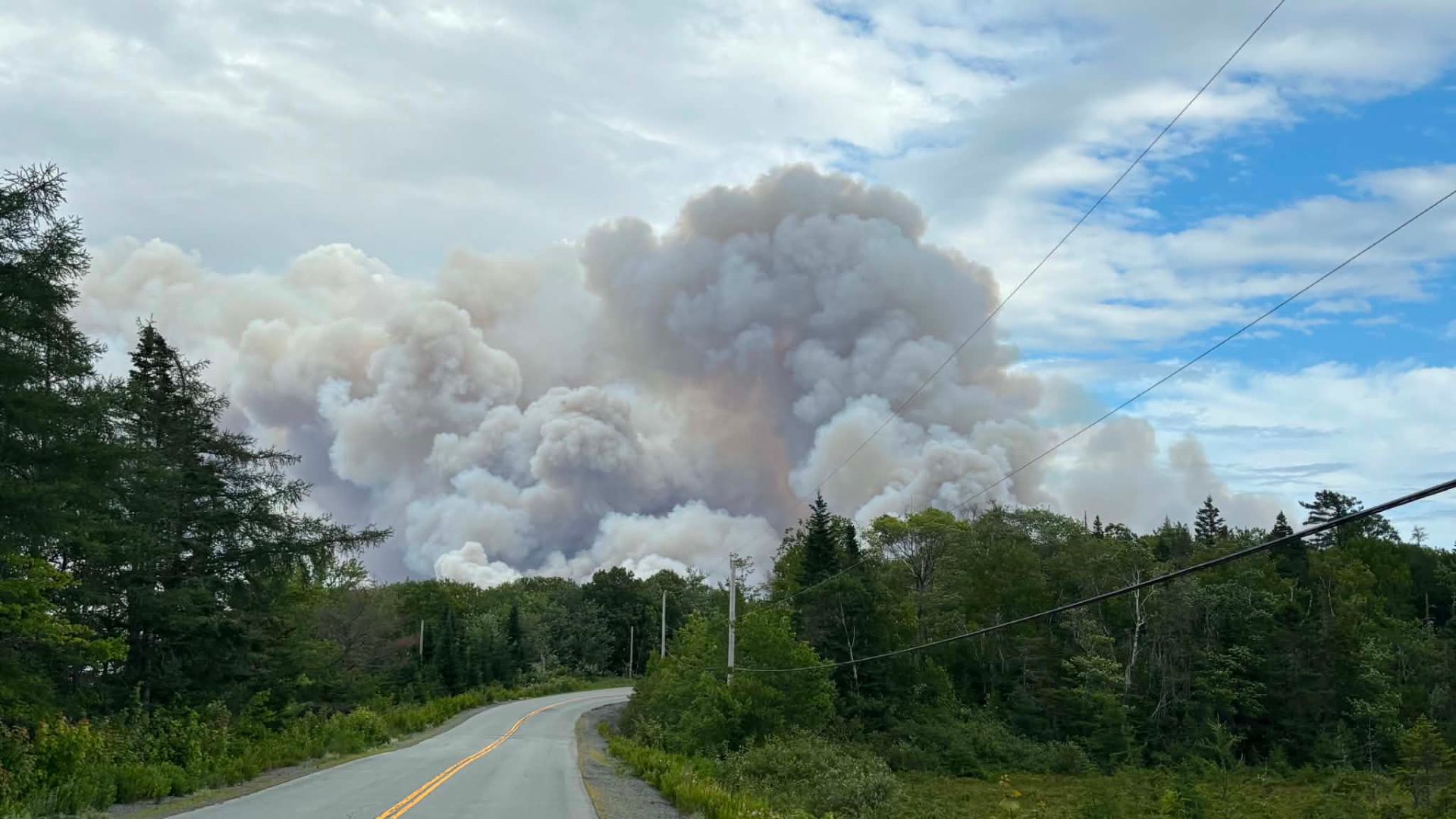
Government officials say DNR personnel and most of the Halifax Regional Fire & Emergency (HRFE) will depart the scene of the Mooseland wildfire at dusk and resume firefighting efforts in the morning, but add that some HRFE personnel will remain at the site to monitor overnight conditions.
Fire officials say it remains estimated at approximately 1,700 hectares and is still classified as out of control, although crews made some progress throughout Friday morning.
At this time, fire officials say there are no structural concerns, and the fire continues to burn in a mostly wooded, rural area. Around 120–150 residents have been evacuated so far.
Two Red Cross evacuation centres have been activated and will be open until further notice.
The addresses of the evacuation centres are:
- Musquodoboit Rural High School, 11980 Highway #224, Middle Musquodoboit, B0N 1X0
- Marine Drive Academy, 479 Church Point Road, Sheet Harbour, B0J 3B0
According to officials, as of 5:30 p.m. on July 17, 21 households (40 people in total) have registered with the Canadian Red Cross and two people are expected to stay at an evacuation centre overnight.
Thursday’s rainfall was welcome, but crews say it didn’t do much to help extinguish the blaze. They say that hot, dry, and windy conditions are a challenge for firefighting efforts.
Lower humidity is expected tomorrow before the forecasted rainfall arrives on Sunday.
In a post on social media, Halifax Professional Fire Fighters shared a graphic showing heat detections found in the area on Friday, July 17. They note that it does not represent the official fire perimeter or current fire size.
The city is also warning people about air quality concerns. Residents are advised to monitor current air quality conditions through Environment Canada’s Air Quality Health Index for Halifax.
Officials say more information about how to protect physical and mental health due to the impact of wildfire smoke, including recommendations on participating in outdoor events and activities, can be found on the Government of Canada’s website.
In a press conference earlier in the day, Jim Rudderham, director of fleet and forest protection with DNR, says the size is still only an estimate because crews have not been able to map the fire from the ground with GPS.
He says 25 DNR firefighters are on the line, along with an incident management team, Halifax fire crews and volunteer firefighters.
Aircraft on scene include two DNR helicopters, four air tractors and two CL-415 water bombers from Newfoundland.
Rudderham says there were active flames and heavy smoke Thursday, but the situation looked more encouraging from the air Friday morning.
Environment Canada meteorologist Bob Robichaud says Saturday will still be a day to watch, with lower humidity and shifting winds expected.
Rain is forecast for Sunday, with 15 to 30 millimetres possible in the fire area.
DNR is also dealing with other active fires in the province.
A fire in Annapolis County is under control, while two new fires in Digby and Queens counties were reported Friday. Officials say those two are believed to be lightning-caused.
– with files from Jacob Moore