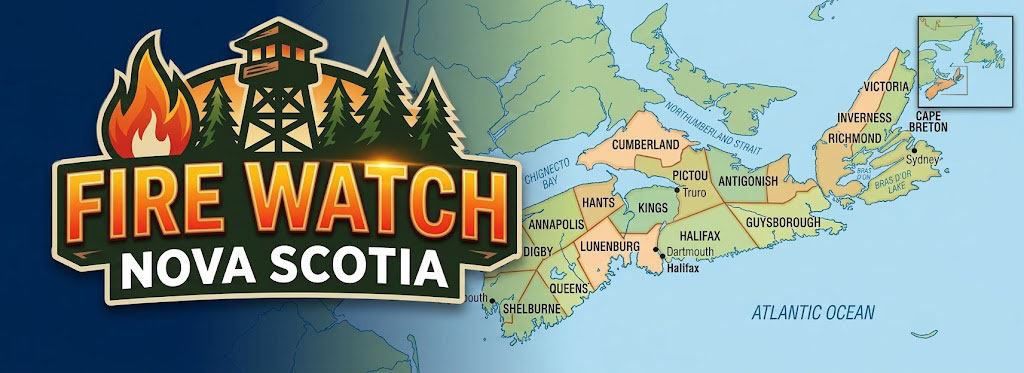


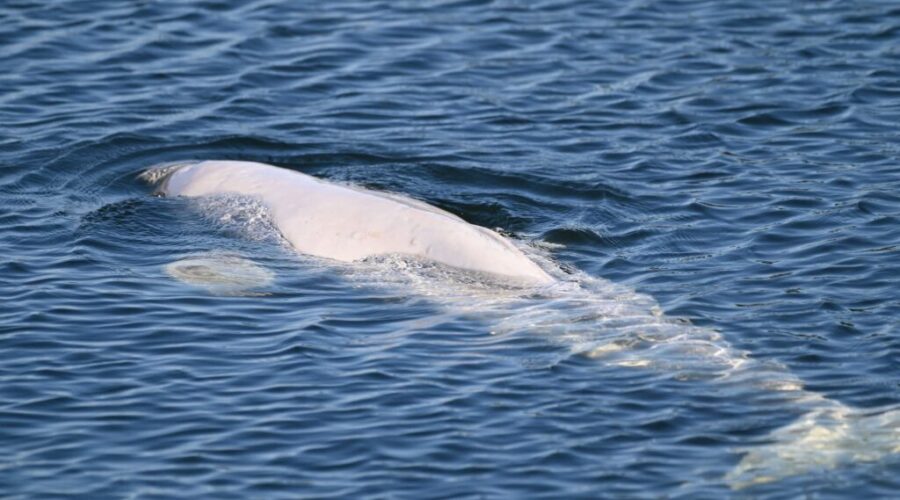
A rare visitor to the Bras d’Or Lake is drawing crowds to the waterfront in St. Peter’s, to catch a glimpse of a beluga whale exploring the marina.
The white whale has become the talk of Richmond County since it was first reported in the lake after entering through the St. Peter’s Canal. Fisheries and Oceans Canada has been monitoring the animal while reminding the public to keep a safe distance.
According to Doug Landry, Fishery Officer with Fisheries and Oceans Canada, seeing a beluga in Cape Breton waters is unusual, but not unprecedented.
“It’s not usually found in the Maritime region or in the Maritime provinces, but we do occasionally get lone belugas, even small groups of two and three kind of leaving and breaking away and kind of traveling into the Maritimes,” Landry said.
Landry believes the whale likely belongs to the endangered St. Lawrence Estuary population. While the exact reason it ventured into the Bras d’Or Lake isn’t known, he says there are a couple of likely explanations.
“We know that the whales sometimes will follow currents or they’ll chase food and kind of get off course,” he explained. “So for us and to see these animals, it was a good situation, I guess, that they did come down this way.”
Could there be two?
The appearance of the whale has sparked speculation that there may actually be more than one beluga in the lake.
While Fisheries and Oceans officers have only confirmed seeing one whale in the St. Peter’s area, Landry says several members of the public have reported seeing two.
“The reports that we have is that some individuals… are actually seeing two belugas,” Landry said. “Our officers went there this morning, they’re only seeing that one.”
He added that some reports suggest the animals could be a mother and calf, although that has not been confirmed. If that proves to be the case, the required viewing distance under the Marine Mammal Regulations increases from 100 metres to 200 metres to provide additional protection for the animals.
Keeping distance
Landry stressed that while it’s exciting to see the beluga, the public plays an important role in ensuring the whale’s safety.
He says people should avoid approaching the whale by boat, kayak or canoe, never attempt to swim with it, and avoid interacting with the animal if it approaches.
“Our biggest thing here is to make sure the whales are safe and the public are safe,” Landry said. “We don’t want them to get comfortable with humans and with boats.”
If the whale approaches a boat, Landry advises operators to slow down, avoid sudden changes in speed or direction, keep propellers well away from the animal, and move more than 100 metres away before resuming normal travel.
Fisheries and Oceans officers from the Sydney and Lennox Passage detachments continue to monitor the whale while it remains in the Bras d’Or Lake.
The sighting comes only a few weeks after an orca was observed near the Canso Causeway, making it an unusually active summer for marine mammal sightings in Cape Breton. However, Landry does not believe the two events are connected, noting that while orcas are regularly found in Cape Breton waters, belugas are much rarer visitors.
For now, officials are hoping the beluga continues to follow its natural instincts.
“Ultimately, what we’d like to see… is those whales, if people don’t interact with them, we’re hoping that they’re going to follow their food source and eventually make their way out of the Bras d’Or Lakes.”