

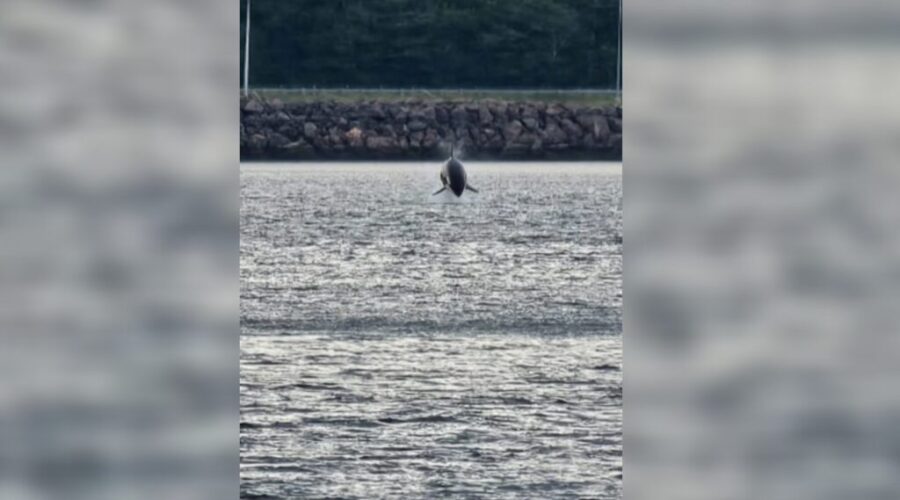
A rare orca sighting near the Canso Causeway is continuing to draw attention from residents, whale watchers and marine animal experts.
Tonya Wimmer, co-executive director and director of conservation with the Marine Animal Response Society, says the organization has received reports over the past few days about an orca by itself in the area. And has seen pictures online.
“It is a killer whale,” Wimmer said. “This guy is definitely an orca.”
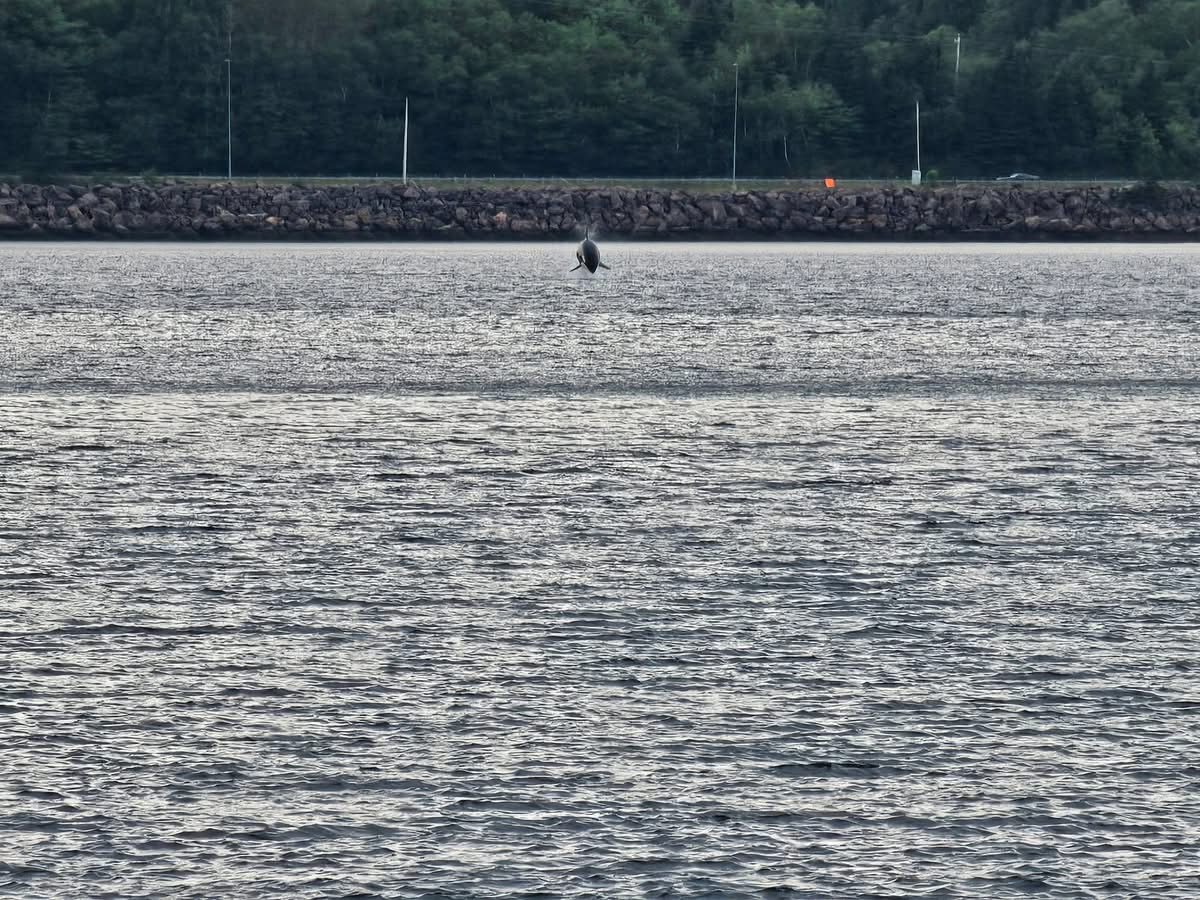
Wimmer says the animal appears to have a white eye patch and a very tall dorsal fin, which is why experts suspect it is likely a male.
She says orcas do pass through Atlantic Canadian waters from time to time, but it is unusual to see one in this particular area.
“In that area, it actually is quite rare,” Wimmer said. “We haven’t had any reports in around the Canso Causeway before.”
Wimmer says orcas have been reported in the past off northern Cape Breton and near the St. Anns Bank Marine Protected Area, but sightings are not common like they are on Canada’s West Coast.
She says it is not clear why the whale has been staying near the causeway.
The area can attract fish, tuna, whales, eagles and other wildlife, and Wimmer says the orca may have followed food into the area.
The Marine Animal Response Society is monitoring the situation to make sure the animal appears to be doing what it needs to do and eventually moves on.
Watch from a safe distance
People hoping to see the orca are being urged to do so safely.
Wimmer says the best way to see it is from shore, while making sure not to block traffic.
“Luckily where it is, people can do that safely from shore,” Wimmer said.
She recommends binoculars or a long-lens camera for anyone hoping to get a better look.
Fisheries and Oceans Canada is also reminding people that there are legal limits around whale watching.
DFO says people must stay at least 100 metres away from whales, dolphins and porpoises.
That distance increases to at least 200 metres if the animal is resting or with a calf.
The department says getting too close could lead to charges under the Fisheries Act, with fines of up to $100,000.
DFO also says aircraft, including drones, cannot take off, land or change course or altitude for the purpose of getting closer to a marine mammal or disturbing it.
Anyone with sightings or concerns can contact the Marine Animal Response Society at 1-866-567-6277.